Buying a House with Japanese Knotweed: Risks, Costs & What You Should Know
15 July 2026 • 12 min read
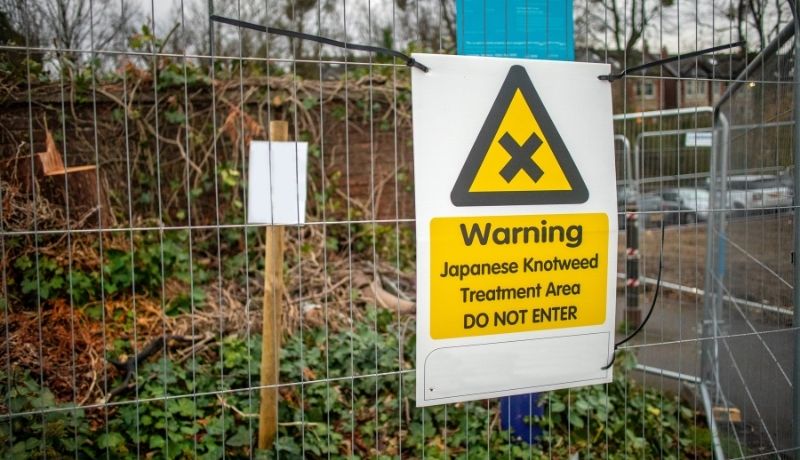
BBuying a house with Japanese knotweed is possible, but most lenders will only approve a mortgage if a professional treatment plan with an insurance-backed guarantee is in place. Where the issue is properly identified and managed, transactions can proceed without significant difficulty.
See what our customers have to say about us
Key Takeaways
- Japanese knotweed can impact mortgage approval, valuation, and resale.
- Lenders typically require a professional management plan with a 10-year, insurance-backed guarantee (from a recognised trade body member) that the infestation requires remedial action.
- Since March 2022, RICS has used four Management Categories (A-D). Knotweed on the property itself is assessed according to structural damage and its impact on amenity or access. Knotweed on adjoining land falls into Category D where it is visible within 3 metres of the boundary.
- Treatment costs typically range from £2,000 to £5,000 for herbicide programmes, while excavation can exceed £10,000.
- Properties with knotweed are commonly valued 5% to 15% below comparable properties without it, depending on severity and management status.
- Sellers must disclose known knotweed issues through the TA6 Property Information Form.
- Japanese knotweed is classified as controlled waste under the Environmental Protection Act 1990 and listed as an invasive species under Schedule 9 of the Wildlife and Countryside Act 1981.
- The RICS Professional Standard on Japanese Knotweed and Residential Property is the current framework. It replaced the 2012 RICS Information Paper and introduced a more evidence-based assessment of the impact and management of Japanese knotweed.
Buying a house with Japanese knotweed is possible, but its presence can affect mortgage lending, valuation, treatment costs, and future resale. The key question is no longer how close the knotweed is to the property. Since 2022, RICS assessments have focused on the actual impact of the infestation on structures and amenity, as well as whether knotweed is present on adjoining land within 3 metres of a habitable space or significant structure on the property being purchased.
What Is Japanese Knotweed and Why Does It Matter?
Japanese knotweed is an invasive non-native plant species listed under Schedule 9 of the Wildlife and Countryside Act 1981, which makes it an offence to plant or cause it to grow in the wild. It is classified as controlled waste under the Environmental Protection Act 1990, meaning that soil or plant material containing knotweed cannot be disposed of through normal waste routes and specialist licensed disposal is required.
The plant is known for its rapid growth and extensive underground rhizome system. It is often associated with structural damage, but the primary concern in property transactions is not the plant itself, but the risk it represents to lenders, insurers, and future buyers.
Knotweed can exploit existing weaknesses in hard surfaces such as paving, drains, and walls. However, severe structural damage is relatively uncommon. Despite this, its presence can significantly affect a property’s marketability due to treatment costs and perceived risk.
From a legal perspective, property owners may be liable if knotweed spreads to neighbouring land. This makes proper identification and management not just advisable but a legal responsibility, one that carries financial consequences if ignored.
How Japanese Knotweed Is Assessed
Surveyors now assess Japanese knotweed using the RICS Professional Standard on Japanese Knotweed and Residential Property. The standard came into effect on 23 March 2022, replacing the 2012 Information Paper. It moved away from the previous distance-based approach towards assessing the actual impact of an infestation.
The former 7-metre rule is therefore no longer the current RICS test. The updated framework distinguishes between knotweed growing within the property boundary and knotweed on adjoining land.
For on-site knotweed, the assessment focuses on whether the infestation is causing visible material damage to a significant structure or is likely to prevent the use of, or restrict access to, amenity space.
The Four Management Categories used are:
- Category A (Action Required): Japanese knotweed is present and causing visible material damage to a significant structure. RICS considers this to have the most impact, thus requiring action and recommending specialist remediation advice. For lending purposes, no mortgage will be processed until a specialist report is obtained and a suitable remedial plan is in place.
- Category B (Action Required): Japanese knotweed is present but does not cause material damage to structures. However, it is preventing or restricting access to amenity space, such as a garden, patio, or driveway. This is still considered to have a potentially significant impact and thus requires action.
- Category C (Management Advised): Japanese knotweed is present but is not causing structural damage or restricting amenity access. This is considered a low-impact situation, and RICS states that no action or mortgage retention is required for lending purposes, although future management may still be advisable.
- Category D (Report Filed): Japanese knotweed is not on the property itself but is visible on neighbouring land within 3 metres of a habitable space or significant structure on the property being purchased. It is reported because there’s a possibility of future encroachment, although no action or mortgage retention is normally required for lending purposes.
Where knotweed on adjoining land is more than 3 metres from a habitable space or significant structure on the property being purchased, it is generally recorded in the surveyor’s notes rather than formally categorised for lending purposes. In exceptional circumstances, a widespread or unmanaged infestation further away may still be reported if it could affect the property’s future value or salability.
The presence of a professional treatment or management plan is also important where remediation is required. A Japanese Knotweed Management Plan can demonstrate that the infestation is properly controlled and can be transferable to future owners. Depending on the circumstances, an appropriate warranty or insurance-backed guarantee can provide additional protection.
How Japanese Knotweed Affects Property Transactions
The presence of Japanese knotweed can affect several stages of the buying process, particularly mortgage approval, valuation, and price negotiation.
Mortgage approval
Mortgage requirements vary by lender and depend on the Management Category and the circumstances of the infestation. Categories A and B are more likely to require further investigation and remedial action, while Category C generally does not require remedial work or mortgage retention for lending purposes. Category D is normally reported but will generally not require mortgage retention because the infestation is on land beyond the buyer’s control.
If remediation is required, a lender may ask for a specialist report, a Japanese Knotweed Management Plan and appropriate warranty or insurance-backed protection. Buyers should check their individual lender’s requirements rather than assuming that all lenders apply the same conditions.
Valuation
Properties with knotweed are commonly valued below comparable properties in the same area, typically by 5% to 15% depending on the severity of the infestation, its impact on structures or amenity, and whether a management plan is in place. This valuation gap often triggers price renegotiation during the transaction, particularly where the issue was not fully reflected in the initial asking price.
Buyer confidence
Even when a treatment plan exists, some buyers remain cautious, particularly if the infestation is close to the main structure or has not yet been brought under control. Clear documentation is the most effective way to maintain buyer confidence throughout the process and at resale.
The Buying Process Explained
Where Japanese knotweed is identified, the transaction follows the standard conveyancing process but with additional layers of due diligence.
The first step is to confirm the presence and extent of knotweed, usually through a survey or specialist inspection. If identified, a detailed assessment is carried out in line with the current RICS Professional Standard to determine the Management Category and the appropriate course of treatment.
A professional management plan should then be reviewed carefully. In most cases, this will involve a multi-year herbicide treatment programme. In more severe cases, excavation and removal of contaminated soil may be required. The plan should include ongoing monitoring and any warranty or insurance-backed protection required by the lender.
At this stage, buyers often renegotiate the purchase price to reflect the cost and implications of treatment. Once the lender is satisfied and all documentation has been reviewed by solicitors, the transaction can proceed to exchange and completion as usual.
Costs and Timeframes
The cost of treating Japanese knotweed varies with the severity of the infestation and the treatment method.
Herbicide treatment programmes typically range from £2,000 to £5,000 and are carried out over two to five years. This is the most common approach and is suitable for most residential infestations that do not require excavation.
Excavation, which involves physically removing contaminated soil classified as controlled waste under the Environmental Protection Act 1990, is significantly more expensive and can exceed £10,000 in complex cases. Excavated material must be disposed of through a licensed waste carrier, which adds to the overall cost.
Timeframes are an important consideration for buyers. While treatment may take several years to complete, properties can still be bought and sold during this period, provided a clear, compliant management plan is in place.
Treatment and management can continue after a property changes hands. RICS guidance notes that chemical control may require treatment over several growing seasons, while excavation can involve significant volumes of contaminated soil and disposal costs.
Your Situation: What to Do Next
The right course of action depends on where knotweed sits in your transaction. The three most common scenarios buyers encounter are:
| Situation | Key risk | Recommended first step |
| Knotweed identified in pre-completion survey, no treatment plan in place | Lender may require further investigation; price should reflect treatment cost | Commission a specialist assessment immediately; check the lender’s requirements before exchange |
| Seller has an existing treatment plan and insurance-backed guarantee | Lower risk; lender will assess the plan’s terms | Ask your solicitor to review the guarantee document and confirm it is transferable to you as the new owner and acceptable to your lender |
| Knotweed discovered after moving in | Legal liability for spread to neighbouring land | Instruct a specialist treatment contractor promptly; obtain a management plan and appropriate warranty or insurance-backed protection where required |
Risks to Consider
Buying a property with Japanese knotweed involves additional risk, but these risks are often manageable with the right safeguards in place. The most common concerns relate to reduced property value, typically 5% to 15% below comparable properties, limited mortgage options, and ongoing treatment costs over the two to five-year treatment period. There is also the potential for future complications when reselling, particularly if documentation is incomplete or the issue has not been formally managed.
Under the Environmental Protection Act 1990, knotweed-contaminated soil is classified as controlled waste. Property owners who allow knotweed to spread onto neighbouring land may face civil claims for nuisance or damage and potentially enforcement action. The neighbour liability risk is a practical reason to obtain a treatment plan promptly, regardless of whether a sale is imminent.
Properties with well-managed knotweed issues and clear documentation are regularly bought and sold without significant difficulty. The key is ensuring that all risks are properly identified and addressed before proceeding.
The Legal Position When Buying a Property with Knotweed
Sellers in England and Wales are required to disclose the presence of Japanese knotweed through the TA6 Property Information Form if they are aware of it. Providing incorrect or misleading information can give rise to legal claims for misrepresentation after completion, a risk worth understanding for both parties to the transaction.
Schedule 9 of the Wildlife and Countryside Act 1981 makes it an offence to plant Japanese knotweed or cause it to grow in the wild. The Environmental Protection Act 1990 classifies knotweed-contaminated material as controlled waste, requiring specialist disposal. Together, these statutes mean that a property owner who ignores a known knotweed infestation faces not just civil liability to neighbours but potential statutory obligations.
From a conveyancing perspective, buyers’ solicitors will request evidence of any treatment plan and confirmation that a 10-year insurance-backed guarantee is in place from a recognised trade body member, such as the Property Care Association (PCA) or the Invasive Weed Control Group (IWCG). Lender requirements differ, so buyers should not assume that an insurance-backed guarantee is automatically required in every case. Where a management plan, warranty or insurance-backed guarantee exists, the buyer’s conveyancer should review its terms and confirm whether it meets the lender’s requirements and can be transferred to the new owner.
Should You Proceed or Walk Away?
In most cases, the decision comes down to how well the knotweed is being managed rather than whether it exists at all.
If there is a professional treatment plan in place, backed by a valid 10-year insurance guarantee that is transferable to you, and your lender is comfortable with it, most buyers choose to proceed, often with a price adjustment to reflect the remaining treatment costs.
If there is no treatment plan, unclear documentation, or uncertainty around the extent of the infestation, lenders typically become cautious. In those situations, the transaction may slow down significantly or fall through.
Where knotweed on-site falls into Management Category A or B, it is sensible to obtain specialist advice before proceeding because these categories indicate either structural damage or a restriction on the use of amenity space. If knotweed is on adjoining land within 3 metres of the boundary, it will generally fall into Category D and should be reported, but this does not automatically mean that the purchase must stop.
A specialist assessment costs relatively little compared to the risk of exchanging contracts on a property with an unresolved infestation and an unwilling lender.
If you are buying a house, you need a licensed conveyancer to help with the legal aspects of the transaction. Get a free conveyancing quote within minutes.
FAQs: Buying a House with Japanese Knotweed
Yes, it is possible, but most UK lenders impose strict conditions. A professionally prepared management plan must be in place, supported by a 10-year insurance-backed guarantee. Lenders assess the knotweed against the RICS Guidance Note’s Management Category framework and will want to confirm the guarantee is transferable to the buyer before proceeding.
Buying a house with Japanese knotweed can be safe, provided the issue is properly assessed and managed. The key considerations are the Management Category assigned by the surveyor, A to D, the severity of any structural or amenity impact, and the existence of a 10-year insurance-backed guarantee where treatment is needed. Where these safeguards are in place, many buyers proceed without issue, although careful legal and survey checks remain essential.
No. While knotweed can exploit existing weaknesses in materials such as concrete and brickwork, significant structural damage is relatively uncommon. This is reflected in the RICS framework itself, where only Category A specifically involves visible material damage to a structure. Categories B and C cover situations where the knotweed is present but not causing structural harm. The primary concern in most property transactions is the risk it poses to lender requirements, property value, and future marketability.
Yes, it typically does. Properties with a history of knotweed infestation are commonly valued 5% to 15% below comparable properties, depending on severity and management status. The impact is significantly reduced where a clear, professionally managed treatment programme is in place with a transferable 10-year insurance-backed guarantee. Proper documentation can make a substantial difference to buyer confidence and achievable price at resale.
The owner of the property from which knotweed has spread may face civil claims for nuisance or damage. Under the Environmental Protection Act 1990, knotweed-contaminated material is classified as controlled waste, and under Schedule 9 of the Wildlife and Countryside Act 1981, allowing the plant to spread can constitute an offence. Prompt identification and professional treatment are essential to minimise both legal and financial exposure.

You might also like

Despite house prices rising over the past couple of years, making it harder for ...
See what our customers have to say about us Trustpilot Boosting the value of ...