Can You Sell A House With Japanese Knotweed?
24 June 2026 • 13 min read
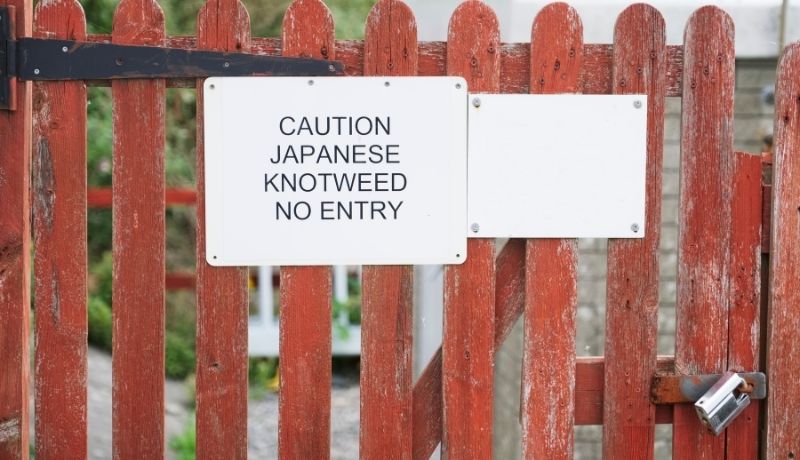
Yes, but there is more to it than disclosure and a treatment quote. Japanese knotweed triggers specific legal obligations, lender criteria, and surveyor assessments that can derail a sale if they are not handled in the right order. Here is what you need to understand before you list.
See what our customers have to say about us
Key Takeaways
- Selling with knotweed is legal, but non-disclosure on the TA6 form is a misrepresentation that can result in compensation claims after completion.
- The Wildlife and Countryside Act 1981 makes it a criminal offence to cause knotweed to spread into the wild, relevant when it is near a boundary or affects neighbouring land.
- Surveyors now assess knotweed using RICS’s Management Category system, from A to D, based on whether the plant is causing actual damage or restricting the use of amenity space, rather than on a fixed distance from the building. Categories A and B typically require lenders to request a management plan and an IBG before completion.
- Excavated knotweed material is classified as controlled waste under the Environmental Protection Act 1990 and must be disposed of at a licensed facility, an overlooked cost.
- Herbicide treatment typically takes three to five growing seasons to be effective, which affects how you time a sale relative to when treatment begins.
- An insurance-backed guarantee (IBG) from a specialist contract is what most lenders and buyers require, not just a treatment plan.
Is it legal to sell a house with Japanese knotweed?
Yes. Selling a property with knotweed is entirely legal. What is not legal, or more precisely, what creates serious legal liability, is failing to disclose it. Sellers must accurately answer questions about knotweed on the TA6 Property Information Form, which forms part of the legal contract with the buyer. Deliberately providing false or misleading information is a misrepresentation under the Misrepresentation Act 1967, and buyers who discover undisclosed knotweed after completion can claim damages covering treatment costs, loss in property value, and, in some cases, the cost of professional fees incurred in pursuing the claim.
Sellers sometimes believe that if the knotweed is not currently visible, perhaps because it is winter, or because it was cut back, they are not obliged to declare it. This is wrong. The obligation is to disclose known presence, not visible presence. If you have previously treated knotweed, been made aware of it by a surveyor, or received complaints from a neighbour about the spread from your land, you are required to disclose it.
There is also a criminal dimension that most sellers are unaware of. Under the Wildlife and Countryside Act 1981, causing or allowing Japanese knotweed to spread into the wild is a criminal offence. Where knotweed is near a boundary and there is a risk of spread to neighbouring land or public land, sellers should seek advice on their obligations before undertaking any removal or treatment works; disturbing the rhizome system incorrectly can accelerate spread rather than contain it.
How surveyors assess knotweed: the RICS category system
When a surveyor identifies knotweed on or near a property, they no longer classify it purely by how far it sits from the building. Since RICS’s current professional standard, Japanese Knotweed and Residential Property (effective 23 March 2022), surveyors work through a decision tree that asks:
- Is the knotweed on-site or off-site?
- Is it actually causing visible material damage to a structure (not just present near pre-existing damage)?
- Is it likely to prevent use of, or restrict access to, amenity space such as lawns, patios, or driveways?
The answers place the infestation into one of four Management Categories:
| Management Category | Description | Typical lender response |
| A: Action | Knotweed is causing visible material damage to a structure (garage, outbuilding, boundary wall, path, etc.) | Inspection by an accredited specialist and a management plan with IBG typically required, often subject to a mortgage retention |
| B: Action | Knotweed is not causing structural damage but is likely to prevent use of, or restrict access to, amenity space | Same as Category A, management plan and IBG typically required, often subject to a retention |
| C: Manage | Knotweed is present on-site but not causing structural damage and not restricting amenity use | Low impact; lenders should not require remediation as a mortgage condition, though a specialist inspection is still recommended for future management |
| D: Report | Knotweed has not been seen on-site, but is visible off-site within 3 metres of the boundary | Reported to the lender for information; remediation is outside the seller’s control since it sits on neighbouring land, so it is not normally made a mortgage condition |
Two points that changed materially from the old approach:
- Distance from the building is no longer the determining factor for on-site knotweed.
A stand right up against a garage wall that isn’t actually causing damage, and isn’t blocking use of the garden, can sit in the lower-impact Category C. Conversely, a stand well away from the house that blocks off half the garden can land in Category B.
- The 3-metre distance now only applies to knotweed on adjoining land.
RICS’s 2018 research (Fennell et al.) found that knotweed rhizomes typically extend no more than around 3 metres from visible growth, replacing the earlier, more conservative 7-metre figure used in the 2012 framework. Off-site knotweed spotted more than 3m from the boundary generally just gets noted in the surveyor’s file, with no lender reporting requirement, unless it’s an unusually extensive, unmanaged infestation, in which case it can still be flagged.
If your property is likely to fall into Category A or B, having a professional management plan and an insurance-backed guarantee in place before the buyer’s survey is one of the most effective ways to protect the sale.
How knotweed affects property value
The impact on value depends almost entirely on whether the knotweed is managed and documented. Unmanaged knotweed, particularly where it falls into Management Category A or B, typically results in buyers offering 5–15% below the asking price, if they proceed at all. The uncertainty about treatment cost and timeline is what drives the discount, not the plant itself.
RICS guidance is explicit that valuers should not apply a flat percentage reduction; the actual figure should reflect factors including pre-remediation market impact, restrictions on use during treatment, any infestation on adjoining land, and residual “stigma” affecting future resale, assessed on the facts of the individual property, not a rule of thumb.
A property with an established management plan, an insurance-backed guarantee, and clear documentation of treatment history is a materially different proposition. Buyers can see that the risk is being managed, their lender is more likely to accept it, and the negotiating dynamic shifts from uncertainty to a known and insured situation.
The practical implication: starting treatment before listing is almost always worth the upfront cost. It does not need to be complete; knotweed treatment takes years, but evidence of active, professional management changes how buyers and surveyors assess the risk.
Treatment options: what they involve and what they actually cost
Herbicide treatment
The most common approach. A specialist contractor applies systemic herbicide, typically glyphosate-based, to the plant over multiple growing seasons. The treatment targets the underground rhizome system, which is what allows knotweed to regenerate even when the above-ground growth is cut back. RICS guidance notes that a minimum of four years of treatment and monitoring is generally required before a completion certificate can be issued, with a wider range of three to five years reflecting how this varies with the size of the infestation.
This has a direct implication for sellers: if you plan to sell within the next 12–18 months and knotweed is present, starting treatment immediately is advisable, even if you cannot complete it before listing. Evidence of active, professional management, with scheduled future treatment visits documented, is what lenders and buyers need to see.
Excavation and removal
Physical excavation removes contaminated soil and rhizome material from the site. It is faster than herbicide treatment but significantly more expensive, and typically involves excavating an area 2–3 metres beyond the visible edge of the stand, not just the footprint of the visible growth, which is why volumes (and costs) are often larger than expected. It carries a compliance obligation that is often overlooked: under the Environmental Protection Act 1990, soil containing knotweed rhizomes is classified as controlled waste and must be transported by a licensed waste carrier and disposed of at a facility licensed to accept it. Using an unlicensed contractor to remove and dispose of knotweed material exposes the seller to regulatory liability, not just a practical risk but a legal one.
Root barrier installation is sometimes used alongside excavation or herbicide treatment to prevent lateral spread into neighbouring land, particularly where the knotweed is near a boundary, though RICS guidance notes that root barriers usually need to be backed by an ongoing monitoring or herbicide programme to remain effective and to satisfy lenders.
| Treatment cost ranges | |
| Herbicide treatment (full programme) | £2,000 – £5,000 |
| Excavation and removal | £5,000 – £15,000+ |
| Root barrier installation | £1,500 – £5,000, depending on the extent |
| Licensed waste disposal (excavation) | £50 – £100+ per tonne |
| Insurance-backed guarantee (IBG) | Typically included in the contractor package |
What an insurance-backed guarantee covers, and what it does not
An insurance-backed guarantee (IBG) is issued by a specialist insurer via the treatment contractor and guarantees that the treatment programme will be completed even if the contractor ceases trading. Most lenders and buyers require one as a condition of proceeding where knotweed falls into Management Category A or B.
Under RICS’s current standard, guarantees are typically available in two lengths: a 5-year term or a 10-year term, either with a two-year “no growth” monitoring period built into the completion certificate before it’s issued. In practice, most mortgage lenders specifically expect the 10-year option rather than the shorter term, so it’s worth confirming which duration your lender needs before instructing a contractor, rather than assuming the shorter guarantee will be accepted. It does not cover structural damage already caused by the knotweed, and it does not guarantee eradication within a specific timeframe; it guarantees that the treatment programme will be completed. Understanding this distinction matters: an IBG is a risk management tool, not a guarantee that the knotweed will be gone.
For an independent overview of the current framework, GOV.UK and the PCA both publish their own guidance on managing Japanese knotweed in property transactions, worth a look if you want to verify any of the above beyond your surveyor’s assessment.
What happens at each stage of the conveyancing process
Knotweed does not just affect the survey; it introduces specific considerations at almost every stage of a leasehold or freehold sale.
Before listing
Arrange a professional knotweed survey from a PCA- or INNSA-accredited specialist. This gives you an independent assessment of the Management Category, a formal record of the infestation’s extent, and the basis for a treatment programme. Instructing a contractor and beginning treatment at this stage means you have documented management evidence by the time a buyer’s surveyor visits.
TA6 disclosure
Answer the knotweed questions on the TA6 accurately and completely. Your conveyancer will help you frame the disclosure. The goal is to be accurate and clear without unnecessarily alarming buyers who might otherwise be satisfied by the management plan you have in place.
Buyer’s survey stage
The buyer’s surveyor will assess the knotweed against the RICS Management Category framework. Having your management plan, contractor documentation, and IBG ready to share at this point, rather than waiting for the surveyor to ask, demonstrates proactive management and reduces the risk that the buyer’s lender will request further investigation.
Mortgage application
The lender’s decision depends on the assigned Management Category and on whether a satisfactory management plan and IBG are in place. Category C is generally acceptable without lender conditions. Categories A and B typically require active management documentation, and Category D (off-site, within 3m) is usually reported but rarely made a mortgage condition since it’s outside the seller’s control. Your conveyancer should confirm the specific requirements of the lender before the mortgage application is submitted; different lenders have different thresholds.
Enquiries and exchange
The buyer’s solicitor will raise detailed enquiries about the knotweed, treatment history, contractor credentials, IBG terms, and any neighbour complaints. Having this documentation organised and ready to provide promptly is one of the most effective ways to prevent delays at this stage.
When to walk away, or renegotiate
Not every knotweed situation is manageable within a sale timeline. There are circumstances where the right outcome for a buyer is to renegotiate the price or withdraw.
| Situation | Recommended response |
| Management Category A or B with no management plan in place | Negotiate a price reduction to cover treatment costs, or require the seller to obtain an IBG before exchange. |
| Seller has used an unlicensed contractor. | Check whether the disposal complied with the Environmental Protection Act 1990. Non-compliant removal may have spread rhizomes rather than contained them. |
| Knotweed affecting neighbouring property. | The seller may face liability to the neighbour. Confirm this has been disclosed and understand what obligations transfer with ownership. |
| Lender declines despite management plan. | Consider alternative lenders as criteria vary significantly. Some specialist lenders have more flexible knotweed policies than high-street lenders. |
| No IBG from a PCA-accredited contractor | Most mainstream lenders will not accept this. Either require the seller to obtain a compliant IBG or reconsider proceeding. |
Are You Selling a House with Japanese Knotweed?
Knotweed transactions involve more moving parts than a standard sale:e, disclosure framing, treatment documentation, lender-specific requirements, and enquiry responses that need to be accurate and timely. The sellers who get through these transactions smoothly are almost always the ones who have their documentation in order before the buyer’s solicitor asks for it, not after.
At Muve, we review knotweed documentation at the point of instruction, not when enquiries arrive. We know which lenders have more flexible criteria and which require specific IBG formats, and we work with sellers to frame TA6 disclosures accurately without creating unnecessary alarm. If a knotweed issue is likely to affect your sale, speaking to us before you list gives you the best chance to manage it without derailing the transaction.
FAQ: Can You Sell A House With Japanese Knotweed?
Yes. The TA6 form asks about the known presence of knotweed, not its current status. If knotweed has been present on the property and treated, you must disclose this, along with the treatment history and any IBG in place. A property with a fully documented treatment history and a valid IBG is often viewed positively by buyers and lenders because the risk has been identified and professionally managed. Trying to conceal historic knotweed is both legally risky and practically unlikely to succeed; treatment records, contractor invoices, and previous survey reports all create a paper trail.
Yes, particularly where the knotweed falls into Management Category A or B under the current RICS framework, and no management plan or IBG is in place. Lender criteria vary; some high street lenders have very strict policies, while some specialist lenders take a more flexible view depending on the documentation available. If a mortgage is declined on knotweed grounds, the first step is to understand exactly what the lender requires and whether those requirements can be met, rather than assuming the sale cannot proceed.
Simply having knotweed on your property is not a criminal offence. However, under the Wildlife and Countryside Act 1981, causing or allowing knotweed to spread into the wild is a criminal offence, which means allowing it to spread to neighbouring land, public land, or controlled waterways can result in prosecution. Disposing of knotweed material incorrectly, for example, putting rhizome-containing soil into general waste, also breaches the Environmental Protection Act 1990, which classifies such material as controlled waste.
Herbicide treatment typically requires a minimum of four years of treatment and monitoring before a completion certificate can be issued, with three to five years being the range generally quoted depending on the size of the infestation, and longer for established or extensive stands. Excavation is faster but significantly more expensive and subject to controlled waste disposal requirements.
An insurance-backed guarantee (IBG) is issued by a specialist insurer and guarantees that a knotweed treatment programme will be completed even if the original contractor ceases trading. Most mainstream mortgage lenders require one where knotweed falls into Management Category A or B. Guarantees are typically available as either a 5-year or a 10-year term, but most mortgage lenders specifically require the 10-year option, so it’s worth confirming which one your lender needs before instructing a contractor. The guarantee should also be transferable to a new owner on sale; confirm this with the contractor, as transferability is what makes it useful to a buyer. IBGs should only be accepted from contractors accredited by the Property Care Association (PCA) or the Invasive Non-Native Specialists Association (INNSA), as these are the standards referenced in current RICS guidance.
About this article
This article was written by Diana Santos, a legal service and property writer with more than a decade of experience creating educational content for property businesses across the UK. Since joining Muve, she has specialised in UK conveyancing, home buying and selling, and residential property law, researching guidance from organisations including the Council for Licensed Conveyancers (CLC), the Solicitors Regulation Authority (SRA), and HM Land Registry.
While this article is reviewed periodically to reflect changes in UK conveyancing practice, it is for general information only and does not constitute legal advice.

You might also like

Conveyancing can seem like a tricky subject to get your head around. For many, ...

In order to sell or rent any property, with only a few exceptions, an ...